Spring 2026 VISITING SPEAKER SERIES


The UCSB Department of Art Visiting Artist Colloquium features ten Artist Talks that are scheduled each Thursday evening from 5:00-6:50pm in UCSB’s Interactive Learning Pavilion / ILP 2101.  All lectures are free and open to the public.

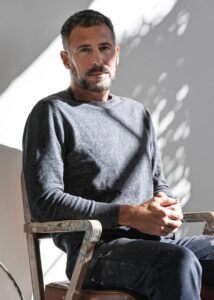
April 2: Alex Lukas


Alex Lukas was born in Boston, Massachusetts, and raised in nearby Cambridge. With a wide range of influences, Lukas’ practice focuses on the intersections of place and human activity, narrative, and history. His fieldwork, research, and production reframe the incidental and the monumental through intricate publication series, sculptures, drawings, prints, audio collages, and experimental curatorial platforms. Lukas’ work has been exhibited widely and is included in the collections of the Pennsylvania Academy of the Fine Arts, the Kadist Foundation, the MIT List Visual Arts Center Student Lending Art Collection, the Philadelphia Museum of Art, and the Libraries of the Museum of Modern Art, New York, the San Francisco Museum of Modern Art, the National Gallery in Washington D.C., amongst other institutions. He has been awarded residencies at The Bemis Center for the Arts, The Center for Land Use Interpretation, and the Kohler Arts/Industry program and was named one of the University of California Regents’ Humanities Faculty Fellows in support of his most recent curatorial project, Public Texts: A Californian Visual Language, a multi-faceted exhibition and public art initiative presented at University of California, Santa Barbara’s AD&A Museum in the spring of 2025. Since 2016, he has published Written Names Fanzine, a periodical devoted to examining sites of hyper-local, unsanctioned public inscription, and from 2021 through 2023, organized CA53776V2.gallery, an experimental exhibition platform on the dashboard of a 2007 Ford Ranger. Lukas graduated with a BFA from the Rhode Island School of Design in 2003 and received an MFA from Carnegie Mellon University in 2018. He is currently an Associate Professor of Print and Publication in the Department of Art at the University of California Santa Barbara.


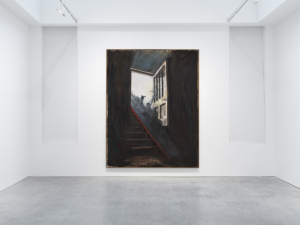
April 9: Hector Dionicio Mendoza


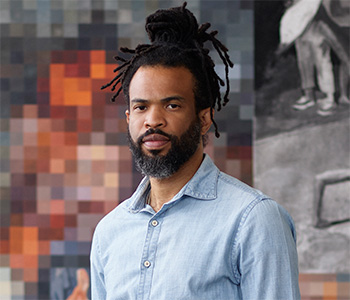
Hector Dionicio Mendoza grew up with a great appreciation for the importance of faith, ritual, and alternative healing traditions as practiced by his grandfather, a fifth-generation curandero (shaman) of Afro-Caribeño lineage whose ancestors migrated to Michoacan via Cuba. He practiced a hybrid form of Yoruba-PurĂ©pecha comprised of traditional religious and spiritual concepts of Catholicism with African curanderismo and ethnobotany, as well as the pre-conquest polytheistic animistic rites and customs of the indigenous PurĂ©pecha people which are rooted in the reverence of ancestors and spirits in nature. This ancestral matrice forms the foundation for Mendoza’s ambitious and expansive multimedia practice, with it’s surprising explorations and unconventional use of natural, organic, synthetic and recycled materials, and explores themes of migration and the environment as well as the geographies of place, memory, identity, and the visualization of immigrant stories.


At the age of twelve Mendoza, along with his family, immigrated to the small town of King City, California, in the ranching and agriculture region located on the Salinas River, along U.S. Route 101 in the Salinas Valley of California’s Central Coast, and featured prominently in John Steinbeck’s novel East of Eden. After graduating from High School Mendoza received a BFA degree in sculpture and installation from The California College of the Arts in Oakland CA. He received his MFA in painting from Yale University in 2009. After completing his Bachelor’s, Mendoza was invited to several artist-in-residence programs and exhibitions in Europe, including a six-month residency at Kunst Futur in Switzerland (2000), The Bossard Project in Berlin (2001), Casa Santos in Barcelona (2002), The Putney Arts Center in London (2003), The Don and Sally Lucas Artist in Residence in Saratoga CA (2015). His awards include the Fleishhacker Foundation’s Eureka Fellowship (2004), Kunst Now (2005) in Berlin, and Eco- Conciente (2007) in Mexico City and the Louis Comfort Tiffany Foundation Fellowship (2022).


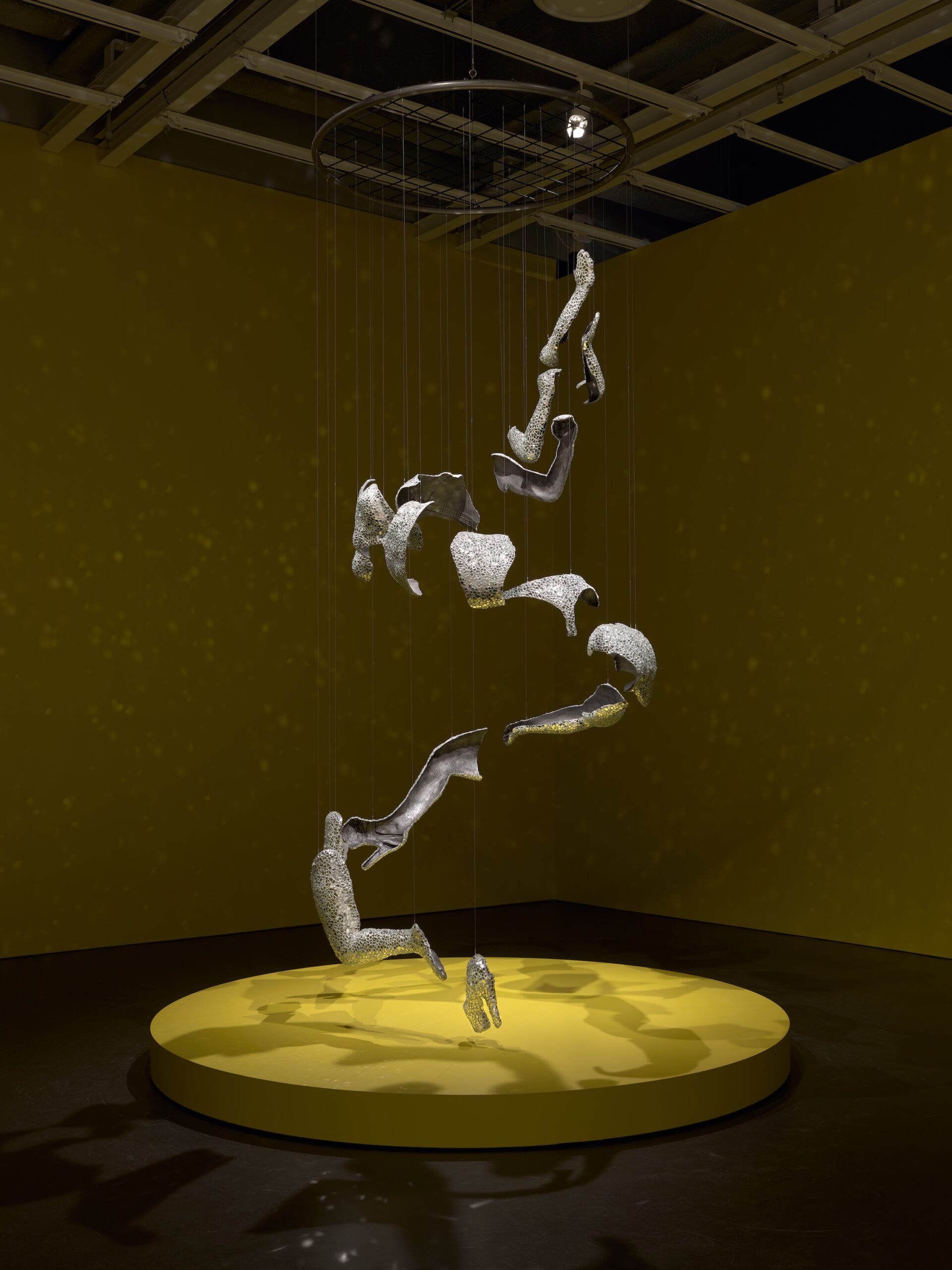
April 16: James Gobel


James Gobel (b. 1972, Portland, OR) is a contemporary artist based in Los Angeles and San Francisco. With a BFA from the University of Nevada and an MFA from the University of California, Santa Barbara, Gobel has cultivated a unique artistic voice that resonates with themes of identity and craft. Gobel has had solo exhibitions in New York, Los Angeles, and San Francisco, most notably at the UCLA Hammer Museum. His work has also been included in significant group exhibitions at the Leslie+Lohman Museum of Art, Des Moines Art Center, Asian Art Museum in San Francisco, Akron Art Museum, Parrish Art Museum, and the New Museum in New York.


His paintings of zaftig male figures, along with abstractions and text works composed of cut felt and yarn, have been featured in prominent publications such as Artforum, Art in America, Flash Art, the New York Times, and the Los Angeles Times.In recent years, Gobel has showcased his work in solo exhibitions like “Helbent For” at de boer Gallery (2026) and “The Charles Laughton Papers” at Patricia Sweetow Gallery (2024). His contributions to the contemporary art landscape reflect a commitment to exploring complex narratives around identity and community.


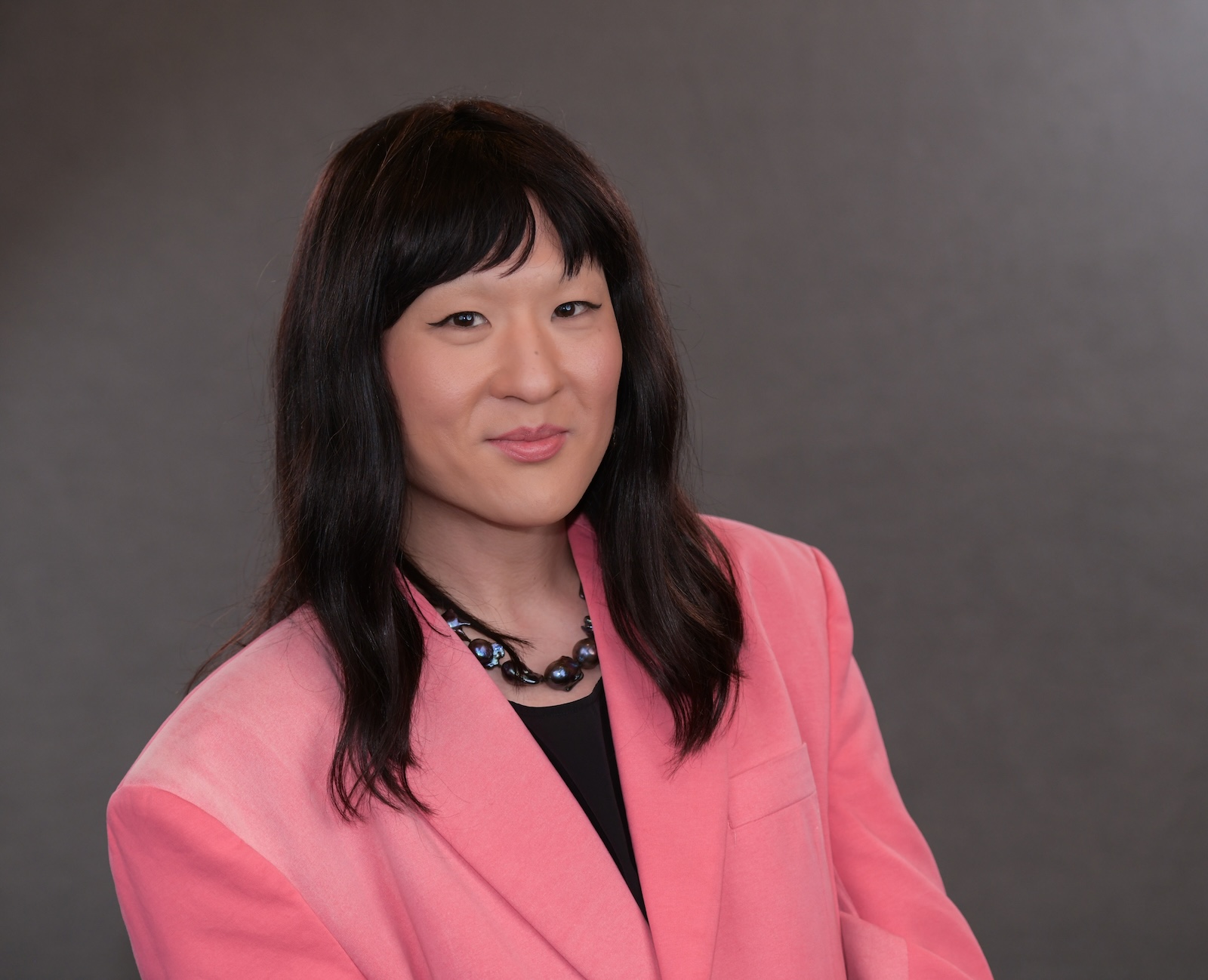
April 23: Jennifer Vanderpool


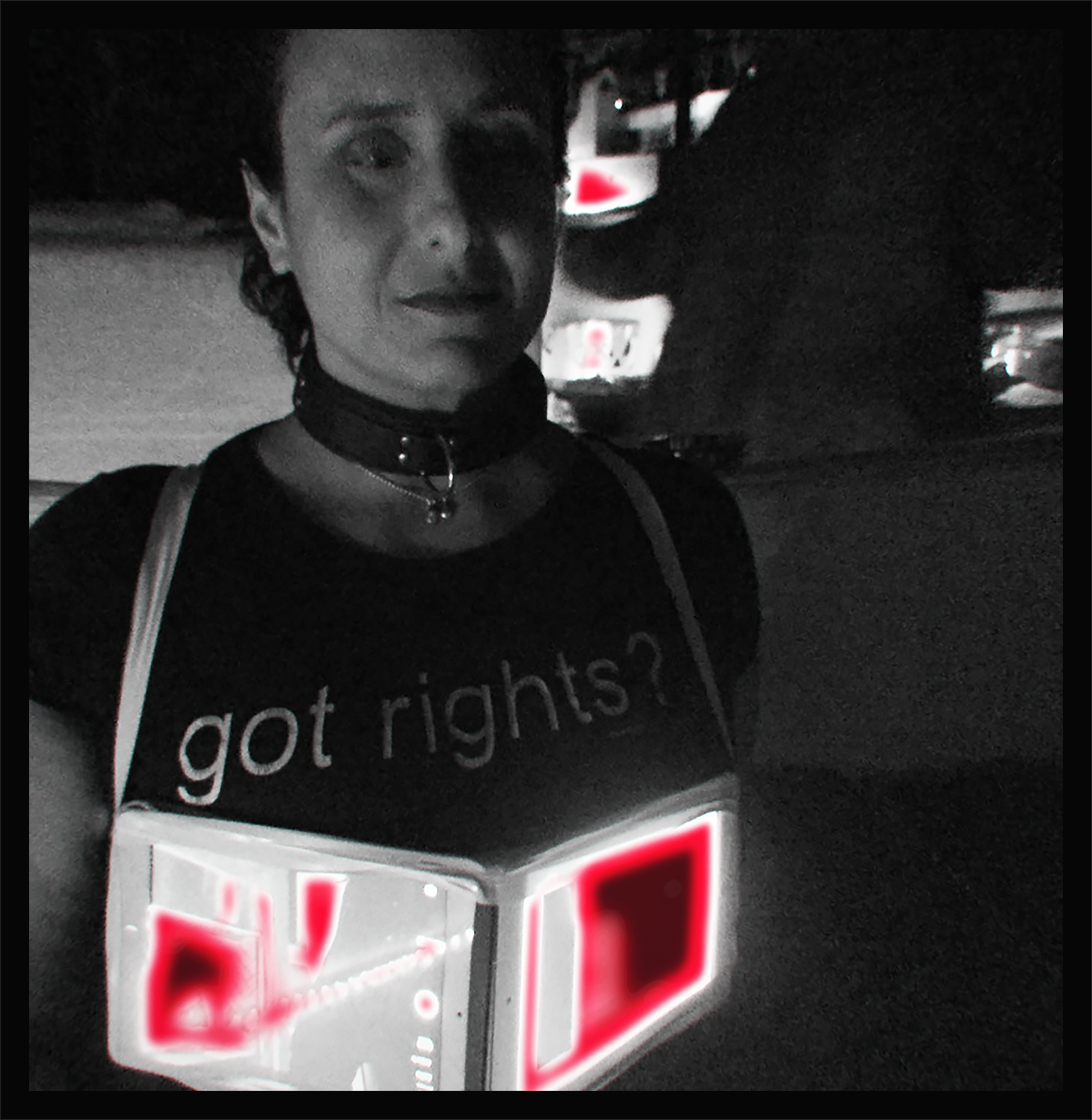
Jennifer Vanderpool, Ph.D., is a multidisciplinary artist, curator, and writer. Her practice investigates the working class and working-class labor. She centers the traumas of disenfranchised peoples and the places they inhabit, and highlights the cultural amnesia perpetuating the status quo. Vanderpool has exhibited solo shows at museums and galleries in the USA, Mexico, Colombia, Ecuador, the UK, Denmark, Sweden, Ukraine, Russia, and Vietnam. Her practice has been funded by the Andy Warhol Foundation for the Visual Arts, the Los Angeles Department of Cultural Affairs, Kunstrådet: Danish Arts Council, Kulturrådet: Swedish Arts Council, Malmö Stad, and co awarded two National Endowment for the Arts grants.


Vanderpool is currently exhibiting in the UK at The Harley Foundation and Wentworth Woodhouse. These exhibitions are part of her ongoing Untold Stories series about disinvested communities which have been funded by the Ohio Arts Council, US–UK Fulbright Commission, British Academy Leverhulme Trust, UCSB research grants, DéPOT (Deindustrialization and the Politics of Our Time)—sponsored by the Social Science and Humanities Research Council of Canada and collaborating organizations in Germany, France, Italy, the United Kingdom, and the US.


April 30: Jenni Sorkin


Jenni Sorkin is Professor and Chair of History of Art & Architecture at the University of California, Santa Barbara. She writes on the intersections between gender, material culture, and contemporary art, working primarily on women artists and underrepresented media. Her books include Live Form: Women, Ceramics and Community (University of Chicago Press, 2016), Revolution in the Making: Abstract Sculpture by Women Artists, 1947–2016 (Skira, 2016), and Art in California (Thames & Hudson, 2021). She has contributed scholarly essays to major exhibition catalogs and books that seek to reconfigure the received histories of twentieth century art, including Leap Before You Look: Black Mountain College (ICA Boston,2015), Outliers and American Vanguard Art (National Gallery of Art, 2018), Among Others: Blackness at MOMA (MOMA, 2018), Groundswell: Women of Land Art (Nasher, 2023), and the Postwar Reader: A Global History, 1945-1965 (Duke University Press, 2025). Her work has been supported by the ACLS, Center for Craft, Getty Research Institute, and Smithsonian Institution. She is a 2025 recipient of the Warhol Foundation’s Arts Writers Book Grant.


May 7: Althea Wasow


Althea Wasow is a filmmaker and Assistant Professor in UC Santa Barbara’s Department of Film and Media Studies. Her films—including the wannabe (starring Ramón Rodríguez; Best Short, HBO’s New York International Latino Film Festival) and The Whole World Revolved Around Her (featuring Wangechi Mutu)—have screened at national and international film festivals and at cultural institutions such as the Institute of Contemporary Art/Boston, the Schomburg Center for Research in Black Culture, and the Queens Museum. A co-founder of the Center for Urban Pedagogy (CUP), a Brooklyn-based nonprofit that uses art and design to expand civic participation, she has also taught in jails and prisons in New York and California. She holds an MFA in Film Directing from Columbia University School of the Arts and a Ph.D. in Film and Media (Designated Emphasis in Critical Theory) from UC Berkeley.


She is currently revising her monograph, Moving Images/Modern Policing: Silent Cinema and Its Afterlives, on the complicity and resistance between police power and motion pictures in early cinema, and is in production on two new essay films. Prior to joining the faculty at UCSB, she was a UC President’s Postdoctoral Fellow at UC Santa Cruz’s Institute of the Arts and Sciences, where she curated the film series “Ornament and Abolition.” Her collaborations in film and visual culture include For All the World to See: Visual Culture and the Struggle for Civil Rights (media researcher/consultant, 2010), An American Index of the Hidden and Unfamiliar (senior editor & co-writer, Steidl, 2007), Rikers High (co-producer, Showtime, 2005), and The Innocents (producer & project editor, Umbrage, 2003/2005).


May 14: Laurie Lipton


Laurie Lipton was born in New York in 1953 and began drawing at the age of four. She was the first person to graduate from Carnegie-Mellon University in Pennsylvania with a Fine Arts Degree in Drawing (with honors). She has lived in Holland, Belgium, Germany, France, London and moved back to the USA after 36 years abroad. Her work has been exhibited extensively throughout Europe and the USA.


Lipton was inspired by the religious paintings of the Flemish School. She tried to teach herself how to paint in the style of the 16th century Dutch Masters and failed. When traveling around Europe as a student, she began developing her very own peculiar drawing technique building up tone with thousands of tiny cross-hatching lines like an egg tempera painting. “It’s an insane way to draw”, she says, “but the resulting detail and luminosity is worth the amount of effort. My drawings take longer to create than a painting of equal size and detail.”


May 21: Jeffrey Vallance


Jeffrey Vallance was born in 1955 in Redondo Beach, CA. He lives and works in Los Angeles. His work blurs the lines between object making, installation, performance, curating and writing.


Often his projects are site-specific such as burying a frozen chicken at a pet cemetery; having audiences with the king of Tonga, the queen of Palau and the presidents of Iceland; creating a Richard Nixon Museum; installing an exhibit aboard a tugboat in Sweden; curating shows in Las Vegas, such as the Liberace and Clown Museum. In Lapland, Vallance constructed a shamanic “magic drum.” In 2004, Mr. Vallance curated the only art-world exhibition of the Painter of Light™ entitled “Thomas Kinkade: Heaven on Earth.”


In 1983, he was host of MTV’s The Cutting Edge and appeared on NBC’s Late Night with David Letterman. In 2004, Vallance received the prestigious John Simon Guggenheim Memorial Foundation award. In addition to exhibiting his artwork, Mr. Vallance has written for Art issues, Artforum, L.A. Weekly, Juxtapoz, Frieze and Fortean Times. He has published several books including: Blinky the Friendly Hen, The World of Jeffrey Vallance, Thomas Kinkade: Heaven on Earth, My Life with Dick, Relics and Reliquaries, The Vallance Bible, and Voyage to Extremes: Collected Spiritual Writings.


May 28: UCSB / MFA GRADS / 2026


Emily D’achiardi

Emily D’achiardi is an internet artist exploring the intersections of digital culture, memory and intimacy. Emily received a BA in art history from Reed College and is currently pursuing an MFA at UC Santa Barbara. Emily creates digital works that use the browser as a site of memory, intimacy, and emotional residue. Her work foregrounds fragments, repetitions, and the quiet systems that script online feeling.”


Keyshawn Scott

KeyShawn Scott works across drawing and installation. His drawings celebrate Black culture while addressing Black experiences and challenging stereotypes. His installations critically engage with American education systems and the ways grocery store settings oversimplify complex systemic issues.


Alexis Childress

Alexis Childress (1993) is a visual artist born in Illinois and received her BFA from Georgia State University (2020). Inspired by Astro-Blackness, her work uses 2D and 3D digital dioramic collage to explore Black American nationalism, systems of power, and the inception of a black identity framework within emerging techno-cultural assemblages, algorithms, and digital networks.

Through a combination of installation and digital art, her work confronts the concept of constructed reality, creating worlds that become reflections of the broken systems of society.


Vivek Karthikeyan

Vivek is interested in reimagining moving image as a medium of phenomenological perception rather than visual storytelling. Drawing from disciplines including cognitive psychology, South Asian philosophy, and contemporary philosophy of mind, he creates immersive hybrid installations that combine traditional time-and-lens based video, sound, creative coding, and VR technology.


Tiffany Aiello

Tiffany Aiello’s thesis project explores the relationship between identity and nonhuman performance, using objects like puppets, costumes, masks and digital avatars as vessels for expression.


Hope Christofferson

Hope Christofferson works with nature to amplify human imagination. With a deep love for creative problem solving, she often looks at natural design and animal behavior to inform the work she makes. As an illustrator, her work stems from a hybrid source of transmutation and communication. Recently the California coastline has inspired a series of wondrously collaborative works that roam the shorelines of reality and dream, merging orchids, ferns, corals, and people into artworks that swim free in our shared fantasea.


Negar Farajiani

Negar Farajiani’s thesis explores weaving as a social and embodied practice. Drawing on her experience as an artist, mother, and migrant, she approaches weaving not only as a material technique but also as a way of building community, memory, and resilience.

Through collective weaving, installation, and essay film, the project creates temporary spaces for gathering, storytelling, and resistance.


June 4: Carmen Winant


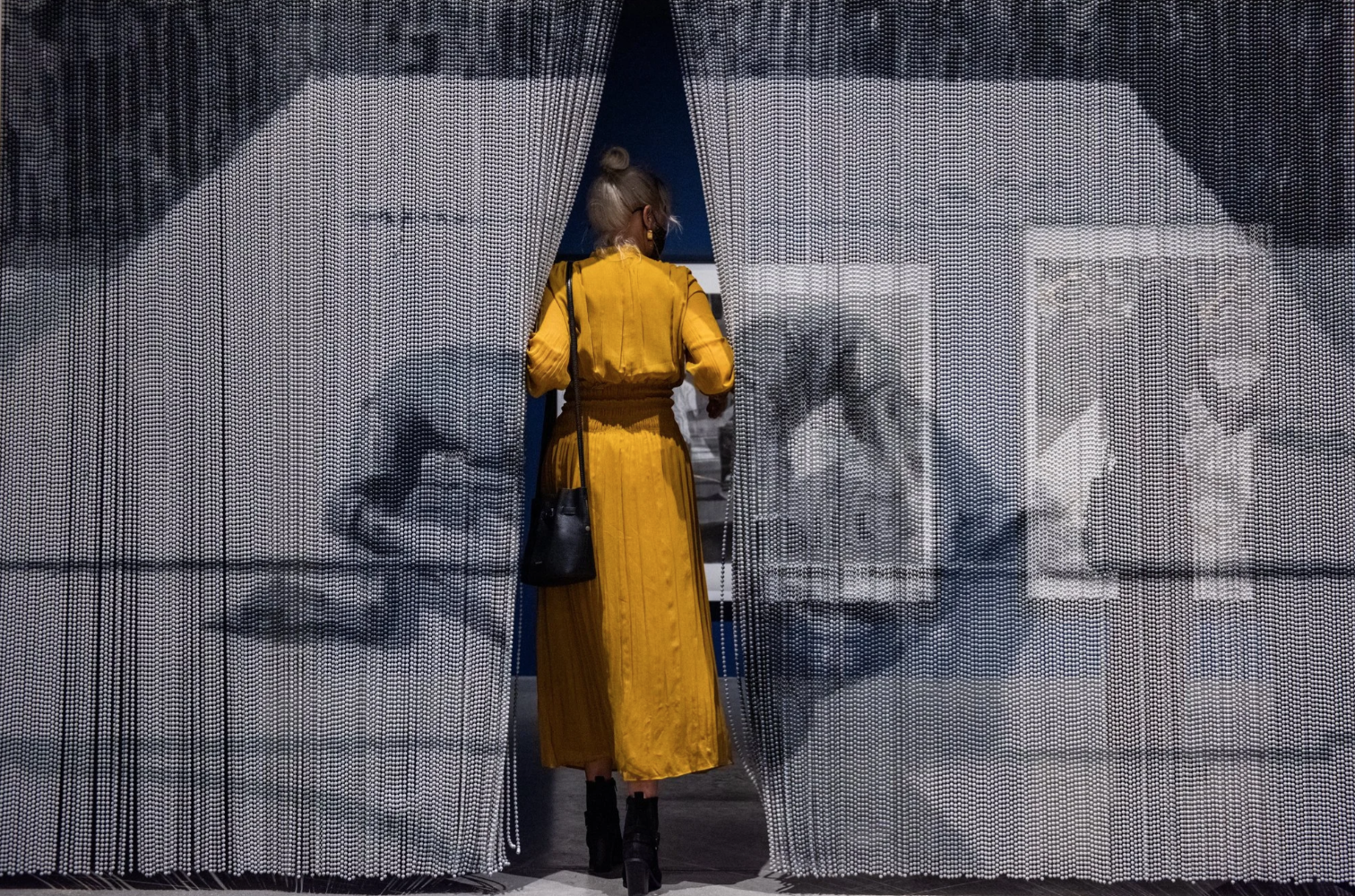
Carmen Winant is an artist and the Roy Lichtenstein Endowed Chair of Studio Art at the Ohio State University. Her work utilizes archival and authored photographs to examine feminist care networks, with particular emphasis on intergenerational, multiracial, and sometimes transnational coalition building. Winant’s projects have been shown at the Museum of Modern Art, the Whitney Museum of American Art, the Minneapolis Institute of Art, Sculpture Center, Wexner Center of the Arts, ICA Boston, the Cleveland Museum of Art, el Museo Universitario Arte Contemporáneo and the Museum of Modern Art (MSN) in Warsaw. Winant is a 2019 Guggenheim Fellow in photography, a 2020 FCA Artist Honoree and a 2021 American Academy of Arts and Letters award recipient. She is also a community organizer, prison educator, and mother to her two children, Carlo and Rafa, shared with her partner, Luke Stettner.